Singer Sewing Machine: A Comprehensive Instruction Manual Guide
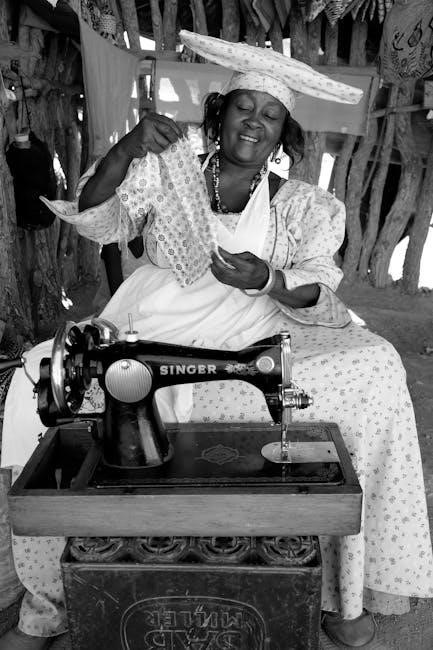
Singer, established in 1851, boasts over 170 years of crafting beloved sewing machines. The Fashion Mate series exemplifies their commitment, offering user-friendly operation and reliable performance for both beginners and experienced sewers.
Historical Background of Singer Sewing Machines
Singer’s legacy began in 1851 when Isaac Merritt Singer patented the first commercially successful sewing machine, revolutionizing the garment industry and home crafting. Prior to this, sewing was a laborious, time-consuming handcraft. Singer didn’t invent the sewing machine – several inventors were working on similar concepts – but his innovations, particularly the up-and-down motion mechanism and the treadle drive, made machines practical for widespread use.
The company quickly expanded, establishing a global presence and becoming synonymous with sewing. Throughout the late 19th and 20th centuries, Singer continued to innovate, introducing electric motors, zig-zag stitches, and various attachments. The Fashion Mate series, while a more recent development, builds upon this rich history of accessible and reliable sewing technology. Singer has consistently adapted to changing consumer needs, offering machines for diverse skill levels and project types, remaining a trusted brand for over 170 years.
The Evolution of Singer Technology (1851 ‒ Present)
From its inception in 1851, Singer relentlessly pursued technological advancements. Early innovations, like the treadle-powered machine, dramatically increased sewing speed and efficiency. The introduction of the electric motor in the early 20th century further revolutionized home sewing, offering greater convenience and power. Singer also pioneered features like the zig-zag stitch, expanding creative possibilities beyond simple straight seams.
More recently, Singer has embraced computerized technology, incorporating features like automatic needle threading, programmable stitch patterns, and LCD screens. The Fashion Mate series represents a continuation of this evolution, blending traditional Singer reliability with modern conveniences. These machines often include a variety of built-in stitches and adjustable settings, catering to a wide range of sewing projects. Singer’s commitment to innovation ensures its machines remain relevant in a constantly evolving crafting landscape.
Understanding Your Singer Model: Identifying Key Features
The Singer Fashion Mate series offers a range of models, each designed with specific features to suit different sewing needs. Common key features include a selection of built-in stitches – typically encompassing straight, zig-zag, and decorative options – providing versatility for various projects. Many Fashion Mate machines boast adjustable stitch length and width, allowing for customization.
Look for features like a free arm, facilitating easier sewing of cuffs and sleeves. An automatic needle threader simplifies setup, while drop-in bobbin systems offer convenient threading. Some models include adjustable presser foot pressure, crucial for working with diverse fabrics. Identifying your specific model number (often found on a plate on the machine) is vital for accessing the correct instruction manual and support resources. Familiarizing yourself with these features unlocks the full potential of your Singer Fashion Mate.
Basic Machine Components and Their Functions
The Singer Fashion Mate, like all sewing machines, comprises several key components. The power switch initiates operation, while the foot pedal controls sewing speed. The handwheel allows for manual stitch control. The stitch selector dictates the stitch type, and dials adjust stitch length and width.
The presser foot holds fabric in place, and the presser foot lifter raises and lowers it. The bobbin winder prepares the bobbin with thread. The bobbin case houses the bobbin, and the needle pierces the fabric to create stitches. The thread take-up lever regulates thread tension. Understanding each component’s function is crucial for successful sewing. Regularly checking these parts ensures smooth operation and prevents common issues. Proper use and maintenance of these elements are vital for extending the life of your Singer Fashion Mate.
The Bobbin System: Winding and Inserting
The Singer Fashion Mate utilizes a drop-in bobbin system for ease of use. Winding the bobbin involves placing the thread spool on the spool pin, guiding the thread through the tension disc, and onto the bobbin. Engage the bobbin winder and press the foot pedal to wind the bobbin evenly.
Inserting the bobbin requires dropping it into the bobbin case, ensuring the thread unwinds in the correct direction – typically clockwise. Guide the thread through the tension slot and pull up a length of thread. Proper bobbin winding and insertion are critical for achieving balanced stitches. Incorrect tension or improper threading can lead to looping or skipped stitches. Always refer to your Fashion Mate’s manual for specific instructions, as variations may exist. Consistent practice will ensure a smoothly functioning bobbin system.
Threading the Singer Machine: A Step-by-Step Guide
Threading your Singer Fashion Mate involves a specific sequence to ensure proper stitch formation. Begin by raising the presser foot and the needle to its highest position. Place the thread spool on the spool pin. Guide the thread through the first thread guide, down and around the tension discs, and then up and through the take-up lever.
Next, thread the needle from front to back. Finally, draw up a length of thread and insert the bobbin, ensuring it’s correctly positioned and the thread is engaged with the tension mechanism. A correctly threaded machine is vital for consistent, high-quality stitches. Refer to the detailed threading diagram in your Fashion Mate manual for visual guidance. Incorrect threading is a common cause of sewing problems, so double-check each step.
Needle Selection: Choosing the Right Needle for Your Fabric
Selecting the correct needle for your fabric is crucial when using your Singer Fashion Mate. Universal needles (size 80/12, 90/14, or 100/16) are suitable for woven fabrics. For knits, utilize ballpoint or stretch needles to avoid skipped stitches and fabric damage. Denim requires heavy-duty needles (size 90/14 or 110/18).
The needle size corresponds to the fabric weight; lighter fabrics need smaller needles, while heavier fabrics require larger ones. A dull or damaged needle can cause thread breakage, skipped stitches, and fabric puckering. Regularly replace your needle, especially after sewing dense materials. Always consult your Fashion Mate manual for specific needle recommendations based on your project. Using the wrong needle can significantly impact stitch quality and machine performance.
Stitch Types: Exploring the Variety of Singer Stitches
The Singer Fashion Mate offers a diverse range of stitches beyond the basic straight stitch. Expect options including zigzag for finishing raw edges and creating decorative applications, buttonhole stitches for professional-looking closures, and stretch stitches ideal for knit fabrics. Many models feature decorative stitches to add flair to your projects – think shell patterns, scallop edges, and more.
Your Fashion Mate’s stitch selection dial allows easy access to these options. Experiment with stitch width and length settings to customize your results. Refer to your machine’s manual for detailed explanations of each stitch and its recommended uses. Understanding these stitch variations unlocks creative possibilities and ensures the right stitch is used for optimal fabric handling and project durability. Don’t hesitate to test stitches on scrap fabric first!
Straight Stitch: Mastering the Fundamental Stitch
The Singer Fashion Mate’s straight stitch is the cornerstone of sewing, used for seams, topstitching, and basting. Achieving a perfect straight stitch requires proper threading, needle insertion, and fabric feeding. Begin by selecting the straight stitch option on your machine’s stitch selection dial. Adjust the stitch length according to your fabric weight – shorter for lightweight fabrics, longer for heavier ones.
Practice sewing straight lines on scrap fabric, guiding the fabric gently and consistently. Avoid pulling or pushing the fabric; let the machine’s feed dogs do the work. Maintaining a consistent seam allowance is crucial for accurate construction. The Fashion Mate often includes a seam guide to assist with this. Mastering the straight stitch is fundamental to all other sewing techniques, building a solid foundation for your projects.
Zigzag Stitch: Applications and Adjustments
The Singer Fashion Mate’s zigzag stitch offers versatility beyond simple seams. It’s ideal for finishing raw edges to prevent fraying, creating decorative embellishments, and sewing stretch fabrics. Adjusting the stitch width and length controls the zigzag’s appearance and function. A narrower width and shorter length create a dense stitch for secure edge finishing, while a wider width and longer length are suitable for decorative applications.
Experiment with different settings on scrap fabric to understand their effects. The Fashion Mate may offer multiple zigzag patterns; consult your manual for details; When sewing stretch fabrics, a slightly wider zigzag allows for fabric movement without breaking the stitch. Remember to test the stitch on a hidden area of your project to ensure it complements the design and provides the desired stretch and durability.
Decorative Stitches: Adding Flair to Your Projects
The Singer Fashion Mate expands creative possibilities with a range of decorative stitches. These stitches, beyond basic functionality, allow for unique embellishments on garments, home décor, and craft projects. Explore shell stitches for edging, scallop patterns for borders, and various geometric designs for personalized accents. Refer to your Fashion Mate’s instruction manual for a complete stitch directory and sample images.
Adjusting stitch width and length dramatically alters the appearance of decorative stitches. Test different settings on scrap fabric before applying them to your final project. Stabilizers may be necessary when using decorative stitches on lightweight or stretchy fabrics to prevent puckering. Consider thread choices; contrasting colors enhance stitch definition, while matching threads create a subtle texture. Unleash your creativity and transform ordinary projects into extraordinary creations with the Fashion Mate’s decorative stitch options.
Tension Adjustment: Achieving Optimal Stitch Quality
Proper tension is crucial for achieving balanced, professional-looking stitches on your Singer Fashion Mate. Incorrect tension results in looping, puckering, or weak seams. The upper tension dial controls the thread tension from the spool, while the bobbin tension, typically pre-set, affects the lower thread. Begin by testing tension on a layered scrap of your project fabric.
If loops form on the underside of the fabric, the upper tension is likely too loose; increase the tension number. Conversely, if loops appear on the top, tighten the upper tension. Minor adjustments are key – small increments can make a significant difference. Refer to the Fashion Mate instruction manual’s tension guide for specific fabric recommendations. Remember to re-thread both the upper and lower threads when making tension adjustments for consistent results. Achieving balanced tension ensures durable and aesthetically pleasing seams.
Presser Foot Pressure: Adapting to Different Fabrics
The Singer Fashion Mate features adjustable presser foot pressure, a vital function for optimal sewing across diverse fabrics. Lighter fabrics, like silk or chiffon, require reduced pressure to prevent puckering and fabric feed issues. Conversely, heavier materials – denim, canvas, or multiple layers – necessitate increased pressure to ensure consistent fabric advancement.
The pressure adjustment dial, usually located on the back of the presser foot shank, allows you to fine-tune the downward force. Start with the default setting and test on a scrap of your chosen fabric. If the fabric slips or doesn’t feed smoothly, increase the pressure. If it’s marked or distorted, decrease it. Consult your Fashion Mate instruction manual for specific recommendations based on fabric weight and type. Correct presser foot pressure guarantees even stitching and prevents damage to delicate materials.
Troubleshooting Common Sewing Problems
Even with a reliable machine like the Singer Fashion Mate, occasional issues can arise. Thread bunching often indicates incorrect threading, improper bobbin insertion, or tension imbalances. Refer to the threading diagram in your manual and re-thread both the upper and lower threads. Skipped stitches frequently signal a dull or incorrect needle type for the fabric. Always use a new needle appropriate for the material.
Fabric puckering suggests incorrect presser foot pressure or tension settings. Adjust these as needed, testing on scrap fabric first. If the machine jams, stop immediately, raise the presser foot, and carefully remove the fabric. The Fashion Mate manual provides detailed solutions for these and other common problems. Remember, many issues stem from user error, so reviewing the manual’s guidance is often the first step to resolution.
Maintaining Your Singer Machine: Cleaning and Oiling
Regular maintenance is crucial for the longevity of your Singer Fashion Mate. Dust and lint buildup can impede performance, so clean the machine frequently with a soft brush, focusing on the bobbin area and feed dogs. A lint brush, often included with the machine, is ideal. Avoid using compressed air, as it can push debris deeper inside.
Periodically oiling key lubrication points, as detailed in your Fashion Mate instruction manual, ensures smooth operation. Use only Singer-recommended sewing machine oil. Apply a small drop to the designated areas – typically the bobbin race, hook, and motor shaft. Over-oiling can attract dust, so less is more. Following the maintenance schedule outlined in the manual will keep your machine running optimally for years to come, preventing costly repairs.
Regular Maintenance Schedule for Longevity
To maximize the lifespan of your Singer Fashion Mate, adhere to a consistent maintenance schedule. After every 8 hours of use, brush away lint from the bobbin area and feed dogs. Monthly, oil the machine following the lubrication points detailed in your instruction manual – bobbin race, hook, and motor shaft are key areas.
Every six months, perform a more thorough cleaning, including the internal components if you’re comfortable doing so (refer to the manual). Annually, consider a professional servicing by an authorized Singer dealer. Regularly checking the needle for damage and replacing it as needed is also vital. Consistent care, as outlined in the Fashion Mate manual, prevents breakdowns and ensures years of reliable sewing performance, saving you time and money in the long run.
Singer EXIMA Series: Advanced Features and Operation
While the Singer Fashion Mate is a robust and reliable machine, the EXIMA series represents Singer’s pinnacle of innovation. Released in June 2025, EXIMA models feature a large, full-color touchscreen LCD and voice guidance to simplify operation, even for complex projects. These machines offer advanced features like automatic thread trimming and needle threading, significantly streamlining the sewing process.
Compared to the Fashion Mate, the EXIMA boasts a wider range of stitch options and enhanced customization capabilities; Though the Fashion Mate instruction manual doesn’t cover EXIMA features, Singer’s website provides dedicated support and tutorials for the advanced series. The EXIMA’s intuitive interface and automated functions make it ideal for experienced sewers seeking precision and efficiency, building upon Singer’s 170+ year legacy.
Finding Support and Resources: Singer’s Website and Dealers
Singer prioritizes customer support, offering extensive resources for Fashion Mate owners. The official Singer website is a primary hub, providing downloadable instruction manuals, frequently asked questions, and troubleshooting guides. Many common issues stem from usage errors, making the online support menu a valuable first step. Singer also maintains a comprehensive database of parts for older models, ensuring longevity and repairability.
For personalized assistance, locate an authorized Singer dealer. With a network established over 40 years, these dealers offer sales, repairs, and sewing classes. Local dealers provide expert advice tailored to your specific Fashion Mate model and project needs. They can also assist with more complex repairs beyond basic maintenance. Remember to input your machine’s model number (hyphen-free, alphanumeric) when searching for support or parts.

Repair Services and Parts Availability
Maintaining your Singer Fashion Mate is crucial for its longevity, but occasional repairs are inevitable. Singer’s authorized dealer network is the primary source for professional repair services. These technicians are trained to diagnose and fix issues specific to Singer machines, ensuring quality workmanship. For simpler problems, the Singer website offers troubleshooting guides that may resolve the issue yourself.
Singer understands the importance of parts availability, even for older models. The official website provides a parts catalog, allowing you to identify and order replacements directly. Dealers also stock common parts and can order specialized components if needed. When requesting parts, always have your Fashion Mate’s model number handy (format: alphanumeric, no hyphens) to ensure compatibility. Prioritize genuine Singer parts to maintain performance and warranty validity.
Safety Precautions When Using a Singer Sewing Machine
Operating your Singer Fashion Mate requires adherence to essential safety guidelines. Always disconnect the machine from the power source before threading, changing the needle, or performing any maintenance. Keep fingers away from the needle area while the machine is running – a finger protector is recommended, especially for beginners.
Never force the fabric under the needle; let the machine feed it naturally. Use the correct needle type for your fabric to prevent breakage and potential injury; Ensure the area around the machine is well-lit and free of clutter. Avoid wearing loose clothing or jewelry that could get caught in the moving parts. If the machine malfunctions, immediately stop and disconnect the power. Do not attempt self-repair if you are not qualified; consult an authorized Singer technician. Always supervise children when they are near the sewing machine.
Understanding NG-Coalescence in the Singer Name Pronunciation
The pronunciation of “Singer” reveals a fascinating linguistic shift known as NG-coalescence. Historically, in Middle English, words like “singer” and “finger” rhymed, with “ng” pronounced as /ŋɡ/. However, a sound change occurred among educated Britons in the late 16th century.
This NG-coalescence merged the “ng” sound, impacting many words, but notably not “singer”. This historical quirk explains why modern pronunciations vary. While some may subtly retain a vestige of the older pronunciation, the dominant form reflects this linguistic evolution; Understanding this phenomenon provides insight into the brand’s enduring legacy and the subtle nuances of the English language. The Fashion Mate, like the brand itself, carries this linguistic history. It’s a testament to how language evolves alongside innovation and tradition.
Singer Sewing Classes and Workshops
Singer offers a variety of sewing classes and workshops designed to empower users of all skill levels, including those new to the Fashion Mate series. These educational opportunities range from beginner basics – mastering threading and stitch selection – to advanced techniques like garment construction and quilting.
Many local Singer dealers host regular workshops, providing hands-on experience with machines and personalized guidance. These classes often cover troubleshooting common issues and maximizing the capabilities of your sewing machine. Furthermore, Singer’s website provides access to online resources, tutorials, and project ideas. With nearly 40 years of experience in community engagement, dealers offer repair services, machine sales, and tailored instruction. Investing in a class can unlock the full potential of your Fashion Mate, fostering creativity and confidence in your sewing journey.